Paper Journal vs. Workout App – What to Choose in 2026?
The charm of tradition is undeniable. When you go to the gym, open a battered, slightly torn notebook, take a pen and write down the next kilograms and repetitions. The smell of paper, the realization that you are cutting yourself off from notifications from the outside world and you are there only with the barbell – it all has its unique atmosphere. For many people, a paper workout journal has become almost a sanctity, a ritual preceding every successful workout.
However, the brutal truth is that nowadays this romantic image can be a brake on your progress. In 2026, we live faster, we have more responsibilities and less time. Right now, when every kilogram counts added to the barbell and every second saved at the gym, sticking exclusively to analog solutions becomes simply inefficient. In the maze of data, complex training plans and lack of time, analyzing everything manually on a piece of paper is a loss of the most important resource – time for recovery. Can a classic notebook really compete with the advanced data analysis you carry in your pocket?
The Math of Training: Why Numbers Don't Lie
The foundation of any successful training plan, whether aimed at hypertrophy (building muscle mass) or building strength, is the principle of progressive overload. It means gradually increasing the demands placed on your muscles, most often by adding weight or increasing the number of repetitions in subsequent training units. To know if you are really growing, you need to know your training volume (volume tracking).
What is Volume?
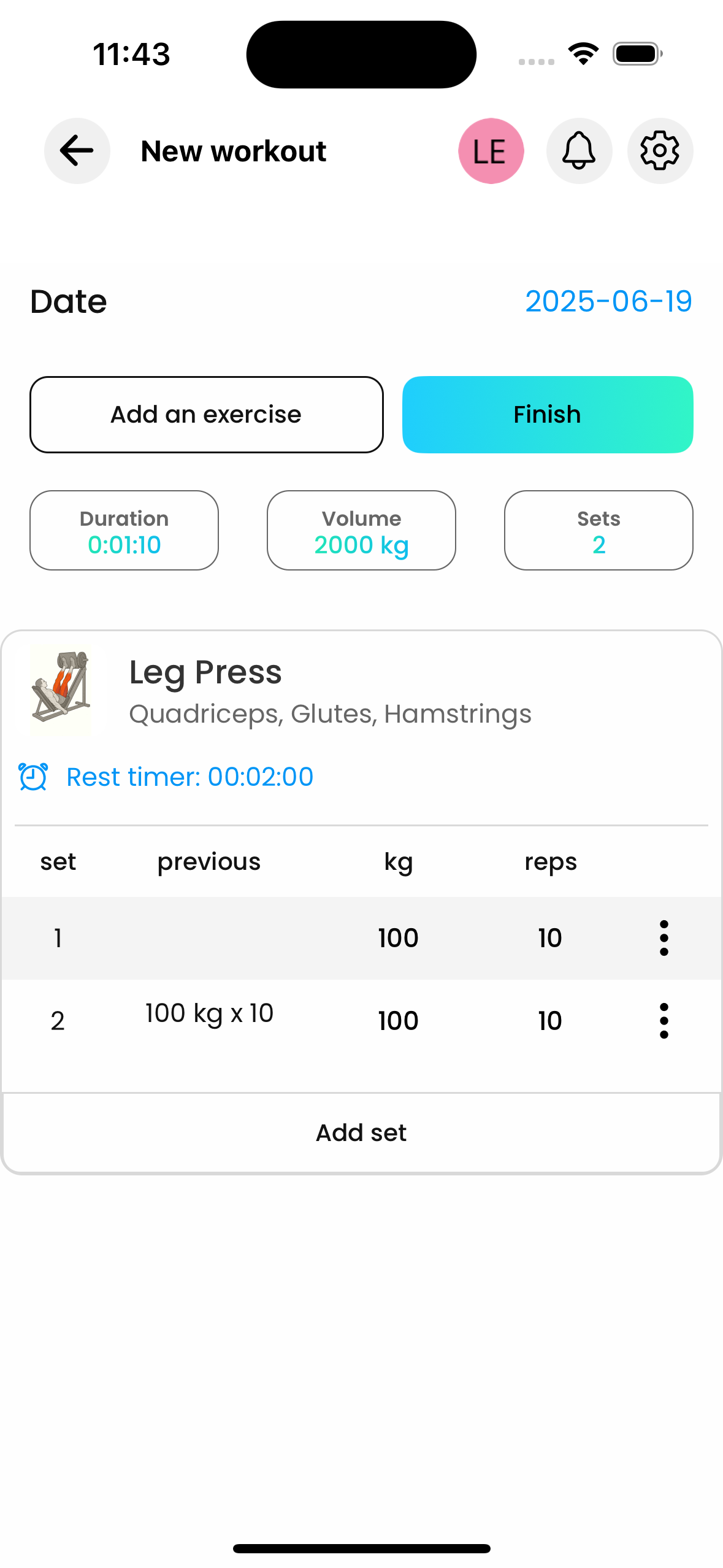
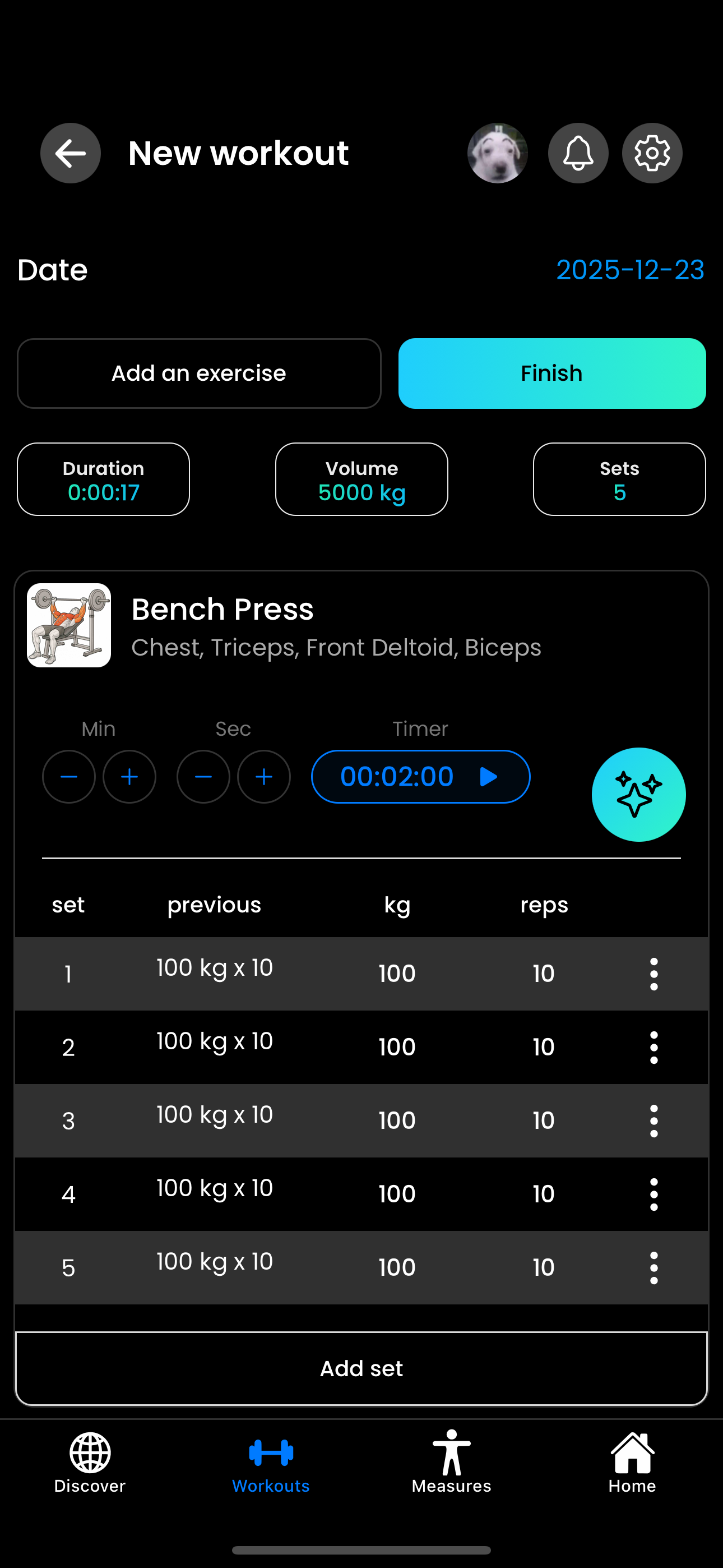
Training volume is the total amount of work performed for a given muscle group. It is calculated according to a simple formula: Weight × Reps × Sets. Proper tracking of this parameter from week to week is absolutely crucial for optimal growth.
Now imagine having to calculate this after every workout with a pencil in your hand. Adding kilograms from several exercises, multiplying it by different repetition ranges and comparing it with the results from a month ago. Calculating the tonnage manually in a notebook after each workout is a loss of at least 10-15 minutes of valuable time, not to mention the susceptibility to simple, human mathematical errors. A workout app does this for you in a fraction of a second, automatically summing up the total weight lifted with an accuracy of one kilogram.
When you track your volume manually, it's easy to make a mistake. A notebook won't signal to you in any way that this week you did a lower chest volume than two weeks ago. The app, on the other hand, automatically recalculates these values and often informs you if your volume has increased, which stimulates adaptation and hypertrophy.
What Paper Will Never Tell You?
A notebook is for writing down, not for analyzing. When you record a set of flat bench presses (e.g. 100 kg for 8 reps), it appears in the notebook as dry information. When you log the same set in a workout app in 2026, it becomes part of a giant database about your own body.
Where does digitalization crush the analog notebook?
Trend Analysis
The application provides you with charts that show whether your strength over the last 3-6 months has been systematically growing, or perhaps you are stuck in a plateau phase. On the chart, a drop in performance can be seen at first glance, in a notebook it's a thicket of hastily written numbers.
Personal Best (PR)
Nothing motivates to further work like breaking your own record. An automatic notification about reaching a new "Personal Record" for the estimated maximum weight (1RM) is a great celebration of records that paper cannot afford.
Rest Time Management (Rest Timer)
The length of rest between sets is of considerable importance for strength and hypertrophy. Short breaks accumulate metabolic stress, long breaks favor the nervous system when working on maximum strength. Why is a stopwatch in a dedicated app or a system one from a phone miles better than looking at a wall clock or a wristwatch? In the application, you count down the exact planned time, which helps maintain identical conditions for a specific exercise week by week. This way you eliminate a variable that could disrupt the comparison of your progress with the previous training unit.
"Killer Feature" – AI and Your Training Technique
We are coming to the point where the gap between analog and digital solutions from 2026 becomes colossal. Even the most expensive, beautifully leather-bound training journal will never, ever evaluate your technique.
The notebook doesn't see, the app analyzes
The notebook doesn't see if you do a so-called "butt wink" during a maximum squat. It won't point out that your barbell path during a bench press is suboptimal. A camera with artificial intelligence (AI) does.
And this is the perfect moment to present Gainflow's biggest advantage over any other form of logging workouts. Thanks to integrated artificial intelligence, the application is able to analyze the recording of your exercise in a few seconds, point out shortcomings in the range of motion and protect you from dangerous joint injuries. Gainflow can analyze how your lifting tempo changes as the set progresses, and suggest corrections that a personal trainer might not catch with the "naked eye".
Convenience, Mobility, and Data Security
If you have been working out for a long time, you may have experienced the loss of data important to you. A training journal can easily be lost at the gym, flooded with water or pre-workout in a bag, or simply completely fill its pages, making you buy a new one, losing instant access to historical performance. Spilled protein on a workout schedule can irritate even an oasis of calm.
You always have your phone with you. App solutions mean that all your plans, workouts, body measurements and strength charts are constantly and automatically synchronized. The data is in the cloud – even if you destroy your phone and replace it with a new model, you log into the application and in a second you recover all your several-year history of being at the gym.
Summary and Verdict
When is it worth staying with paper? Honestly – only if you deeply hate using the achievements of technology during a training session, notifications cause you to completely lose concentration and you accept the fact that your progress tracking is very inaccurate. Tradition is charming, but it has a high price of abandoned potential.
The cost of lacking data
Guesswork instead of facts
By basing your progress solely on notes in a draft or your own, fallible memory, you decide on random results. Your muscles will not grow from just intentions and guesswork, they need hard data and a gradually dosed stimulus from month to month.
Why then is it worth switching to an application, and to Gainflow in particular? Because your muscles and the sweat you dedicated deserve concrete data. With Gainflow you will calculate the exact tonnage, you won't make a mistake in the rest time, you will always maintain the correct technique with the help of AI, and notifications about a new record will inspire you with great motivation to act.
Ready to Ditch the Paper?
Download the free Gainflow app and bring your workout journal into the 21st century. Benefit from automatic volume counting, a built-in stopwatch, AI technique analysis, and track every piece of your progress on clear charts.